
by Fred Brewer | Nov 30, 2017 | Client Tips
Ah, the work-life balance: Is it just a myth for small business owners or can you actually have a successful business and an enjoyable life? Well, it is possible if you just accept a couple of things:
Work and life will never be totally separate.
If you want to be able to completely abandon your work the moment the clock hits 5:00PM, owning a small business is not right for you. The reality is, your personal and professional life will always overlap. You may be in the middle of dinner with the family when you get an email or an idea for how to make the company more efficient. You may be in the middle of a job when you remember you still need to get a babysitter for Friday night. Accepting the overlap and learning to manage it and remain in the present is the key to feeling balanced and centered. What do we mean by “managing” the overlap?
Let’s say you did have an idea for how to make the company more efficient mid-dinner, mid-conversation. You could sit there, half-listening, while you mull over your new idea in your head, OR you could say, “I’m sorry but I just had an idea for work. Do you mind if I jot it down really quickly so I can give you my undivided attention?”
Most of the time, your significant other, kids, or whoever you’re having dinner with will appreciate the fact that you want to be completely focused on what they’re saying and will allow you the time to do what you need to do to clear your head. And you don’t need to scramble to find a notepad — you have one in your phone (which we know is always with you: you’re a business owner). Quickly jot down your idea or make a reminder for yourself, and then let go of it so you can focus on the present.
What about when you’re on the job and you remember you need to find a babysitter for this week’s date night? Stop what you’re doing (if possible), and set a reminder on your phone for your lunch break or for the end of the work day. Once you’ve set a reminder, clear your head and get back to business.
You may also want to try the notepad or reminder method when your mind is racing in bed. It’s easy to miss out on much-needed sleep when you’re a business owner, but if you aren’t rested, you can’t bring your best to the business, to your employees, to your customers, or to your friends and family. It seems that bedtime is when all of the ideas and reminders of what you should do, need to do, or needed to do come flooding in. But don’t lie there trying to hammer them all down or spend hours worrying about whether or not you’ll remember them in the morning — jot them down in your phone or in a bedside notebook and let go of them. They’ll be there for you in the morning.
The scales will tip more heavily to one side at different times.
Wait, doesn’t balance imply that the scales are always evenly weighed? Yes, but the realistic business owner will need to be a little more flexible with his or her definition of balance. Some days, the scales may weigh more heavily on the work side of things, while on other days, they may weigh more heavily on the personal life side. The scales will always shift from time to time, but how you prepare for and handle the shift will make all the difference in how balanced your life feels during these changes.
For example, if you know you’re heading into your busy season or something at work requires you to put in several long days of deep focus, let your family and friends know. If you tell your significant other, your kids, and your good friends that you’ll be M.I.A. for a week or two (or a season), they’ll be much more understanding than they would be if they were left in the dark and feeling ignored. Remind them of how important they are to you and how important your time with them is, and make plans to get some quality time in before or after your focus session.
Of course, no one can survive a long period of ALL work and no play. To avoid burnout and feelings of being off-balance, make sure to set aside at least some time in your day and week for family, friends, hobbies, and relaxation. Whether that means a crossword puzzle with your morning coffee, 30 minutes of pleasure reading before bed, a lunch-time phone call with your wife or husband, or a scheduled movie night with the family, make it happen. Sometimes, as little as 15 minutes of unwinding can make the buckled-down days feel a little more balanced.
So yes, in our opinion, a balance can be achieved. Is it a perfect balance? No, not by a long shot. But you can truly have it all if you just set your priorities, communicate with the special people in your life, and remain flexible and realistic about things.
What do you do to maintain a feeling of work-life balance? We’d love to hear from you!

by Fred Brewer | Oct 30, 2017 | Client Tips
Starting your own service business can allow you a great life. But it’s not always easy and it isn’t right for everyone. Here are five questions to ask yourself if you’re considering starting a service business:
1. Do I have a heart for service?
We’re lucky to partner with some pretty great businesses that really love serving those in their communities. But over the years, we’ve also met some business owners who really shouldn’t be in the service business. Why? They don’t like serving! They don’t have a heart for service and instead think of their customers as pains in the ass or burdens. It may seem like an obvious question if you’re considering going into the service industry, but make sure you really dig deep and find out if you have a heart for service — and be honest with yourself! If you don’t have a heart for service, save you, your employees, and your customers the heartache and go into another field.
2. Is there a need for this particular service in my community?
One mistake that business owners make is that they launch businesses or products people don’t want or need. So before you put the energy, effort, money, and time into starting a service business, do some basic research and find out if there’s really a need or demand for your service in your community. Start by looking at what your community already has, reading up on forums, and asking friends and people you meet. If it’s obvious that what you have to offer is missing, move forward with your plans. If it’s not, give it some thought.
3. What will define and separate my business from others in my community?
No matter what service industry you go into, you’re (probably) going to have competitors — how will you stand out? It’s easier to define your company with a culture, vision, and purpose at the start than it is to try to establish these things later on or repair a bad reputation. So take some time to consider what type of company you want to build and how you’ll stand out from your sea of competitors. Think about companies you admire and that make you, as their customer, feel good. Decipher what they do differently. Check out your competitors reviews and see what their customers like and don’t like about their service. From there, make a list and determine just what kind of company you’ll build.
4. How big do I want to scale?
We all have to start somewhere, but think about where you’d like to be five and 10 years from now as well. Do you want to remain small, a one man or woman company? Or do you want to scale bigly and employ dozens of people in your community? There’s no right or wrong answer, but knowing how big or small you want your company to be will help you make better decisions going in and over the years.
5. What kind of lifestyle do I want my business to afford me?
We have a saying here that goes something like this, “It takes just as much blood, sweat, and tears to build a business you hate as it does to build one you love — so why not build one you love?” No two businesses are the same and no two business owners want the exact same things from their business. Some business owners want to be out in the field, while others want their business to eventually function largely without them. Knowing exactly what you want from your business going in will help you put the systems and steps in place to get you where you want to be so you can have the lifestyle you want to have.
So get to work reflecting. Putting the effort and time into thoroughly and honestly answering these questions up front will serve you well on your business journey!
If you’re considering starting a service business and would like to talk with a business coach before getting started, let us know. We can recommend some great coaches with some great insight — just ask!
Ready to start your business? Do these 6 things first!

by Fred Brewer | Sep 30, 2017 | Client Tips
The world of search and SEO can be confusing, but if it’s all Greek to you, you’re not alone. Here are some of the most commonly asked questions answered by Client Relationship Manager, Chris Pitts. If you have questions you’d like Chris to answer in the next round, please leave them in the comments section and we’ll do our best to get to all of them in time!
#1 How Do Rankings Work & What’s The Difference Between Organic & Maps?
There are three places on a Google Search Results page that are completely independent of one another where ranking comes into play.
The first section (at the top of the page and sometimes at the bottom as well) is Google Ads. These are marked by an “ad” symbol and are determined entirely through the Google PPC (Pay-Per-Click) advertising program. These spaces are not subject to the Google algorithm and instead depend on how much a company is bidding per click, as well as quality score (relevance of the content on the landing page to the search) and competition. You will not show up there if you aren’t in the Google Ads PPC program.
The second place is Maps. Maps results are delivered to a searcher when they are searching for a business or service “with intent.” What “with intent” means is that Google has determined that the searcher is looking for a business near a physical location. If you expand the Maps results, it will take you to Google Maps, which shows a much larger bank of results within a given area.
The problem with Maps is that it is built for brick and mortar stores, not service businesses. Despite this, Google still shows Maps results for service searches, which muddies the water a bit. Because results are so tied to physical location, you will not show up in the Maps pack if you are not physically located near the area the searcher is physically searching from or near the central area the searcher has put into the search bar. All ‘near me’ queries are treated as a search for a brick and mortar location.
There has been a rich history of people spamming Maps by creating listings in places other than physical locations (i.e. P.O. Boxes and UPS Stores). This is against Google guidelines, but Google is spotty with how they treat spam, so while it’s risky to operate this way, we do see companies have success doing this from time to time. Of course, you risk losing your Google Maps listing altogether, which means losing all of your reviews as well, since they are housed within Google Maps. Not worth it in our opinion!
The third section is organic. Organic rank is determined mostly by the content, quality, and markup on the site itself. Several factors go into this determination, but some of the biggest ones are:
- Site speed (page load time)
- Relevance and readability of text content on the page (Google works because it delivers results that are relevant to the searcher. Text content is the only way for Google to determine this, outside of the coded information we send to them)
- SEO Titles/Meta Descriptions (the titles and descriptions on the back end of the page that make up the snippet that shows in search results and gives Google an overview of the content on the page)
- Relevant links to the page from high-quality sources
Each page of a site can be indexed separately, so you may see several pages from the same site come up for searches.
When you’re dealing with organic rank, specifically on a home page, you have to take into account NAP info (Name, Address & Phone Number), and potentially competing websites. If your business has more than one website (especially if each website has a different phone number or address associated with it), Google will get confused, and could drop your ranking on both sites. Keeping your NAP info consistent on all sources online helps keep your organic ranking up. Any place your NAP is incorrect or inconsistent can be seen by Google and lowers your site’s trust rating. After all, if there’s conflicting information, how can Google be confident that it’s presenting the correct information to the searcher? It can’t, so it will drop your organic ranking.
#2 What Does NAP Mean & Why Is It So Important To Be Consistent?
NAP info stands for Name, Address & Phone Number. When it comes to information Google is looking for from your business, these are the big three. Why? These are the three things that Google believes a searcher will be looking for most often. They want to know your name (for obvious reasons), they need your phone number for scheduling or questions about products/services, etc., and they need your address to actually get to you if you are a brick and mortar store. Google treats all businesses as if they were brick and mortar stores in most respects, so even if you are a service business, Google still views NAP information as very important.
Because Google indexes sites all over the web, it has access to almost every place your business is listed online, whether you know it’s listed there or not. If you have different phone numbers, addresses, or versions of your business name online, Google loses trust that the information presented is accurate.
Google only works because the search results it presents are accurate and helpful to the searcher. If the searcher can’t trust the information Google is presenting, he or she will stop using Google — and Google doesn’t want that.
If Google is getting mixed signals from all over the web with different phone numbers, addresses, and variations of your business name, it will suppress your business in search results in order to prevent a potential searcher from getting the wrong information. This is critically important and is often overlooked by businesses. Many companies use tracking numbers to determine where business is coming from, but when these are used incorrectly, it confuses Google. This is where many companies slip up.
Note: It’s a bit different if you’re a business with more than one location.
#3 Why Don’t I Show Up In Maps Anymore & How Can I Change That?
Google Maps is an ever-changing landscape. As Google changes its Maps algorithms, companies find ways to exploit it and spam the system. Every time this happens, it forces Google to re-examine the algorithms to try to combat these spammy tactics. This is the largest factor contributing to changes in Maps rankings — however, it is far from the only one…
Every day, more and more people are using their phones and tablets to search for businesses and services. As this shift happens, it changes how Google delivers results and what those results are. Fifteen years ago, people didn’t have the Internet on their phones, and tablets weren’t even a thing. All searches were being performed from desktops in the home or office, which meant that people had to put the location they were searching for directly in the search bar. As technology advanced and people were empowered to search on the go, the whole system changed. Now people are looking for things close to their physical location, which can be derived from a phone or tablet’s GPS location. They are also generally looking for something more immediate, and many times, they’re not willing to dig as far into the search results. This shift has caused Google to shift things a bit in terms of how they present Maps results.
The Maps views themselves zeroed in as the majority of the searches were deemed “on the go” and needing to be tailored to the physical location of the searcher. This change also eradicated the need to include location keywords in searches. Now, instead of searching for “coffee shop Nashville, TN,” (a search that would center around downtown Nashville), a searcher might search “coffee shop near me,” or even simply ask their voice assistant to “find a coffee shop nearby,” which centers the search around the searcher’s physical location. This means that every searcher will get a slightly different Maps result.
What does this all mean?
The big takeaways are that your physical location is key to showing up in Maps. If you’re not physically located near where most of your clients and customers are searching from, you may not show up in their personalized Maps results. The other important factor here (and the one you, as the business owner, can actually control) is reviews. Reviews are housed within Maps and are the most important factor in a potential customer choosing you over your visible competition. If you focus on getting good reviews and responding well to bad ones, you will stand out among anyone else that shows up in the same Maps space. It doesn’t matter if you are one, two, or three — if you have 100 more positive reviews than the other two, you’re likely to get the customer.
#4 How Do I Get Reviews?
Ask everyone for a review! Obviously if you have a visibly unhappy customer, you may not want to ask that person, but in that case, you should be doing things to correct the situation and leave them satisfied. Outside of those small instances, you should be asking everyone for a review. Explain how important reviews are to you as a business owner, and that you value feedback, both good and bad. You want to know how your people did and, because you have confidence in your company, you aren’t afraid for that feedback to be public.
Many people don’t think their opinion is important enough to take the time to leave a review, and many often don’t know how to leave you a review even if their opinion does matter. Familiarize yourself with the review process so that, if a customer asks you how to do it, you can tell them with confidence. Some other things you may want to try:
- Have physical collateral available to give to customers that explains the process and the importance of reviews.
- Invest in tools that help you get reviews from your clients.
There are two big DON’Ts though:
- Don’t publicly incentivize reviews. This is strictly against Google guidelines, as they don’t believe incentivized feedback is legimiate. If a customer puts “thanks for the gift card” or something to that effect in the review, you risk losing all of your reviews and maybe your listing altogether.
- Don’t leave reviews for your own business. The only people who should be leaving you reviews are people who have actually used your services or visited your store. If you are a service business and you start getting reviews from family members several states away or get one from an account that is tied to your business, you could lose all of your reviews and your listing. It’s not worth it!
The last thing I will say is, don’t be afraid of negative reviews. You can’t please everyone all the time — it’s just not realistic. A negative review with a well thought out, amicable response is worth 10 five-star reviews. Many times a searcher will look at negative reviews first, so this is your chance to make a great first impression on a searcher. Don’t ever underestimate the power of a well-answered one-star review!
And while this may sound counterintuitive, a few three- or four-star reviews mixed in with many more five-star reviews boosts the overall credibility of the other five-star reviews. They look more authentic and genuine because people trust that the reviews there were not incentivized in any way to create a “perfect” star rating.
#5 Do I Need To Respond To Both Positive & Negative Reviews? How Should I Respond?
Definitely respond to negative reviews. Every negative review that comes in should have a written response. My advice is to post it the day after it comes in, if possible. You don’t want to respond the second you see it, because oftentimes, when it’s that fresh, emotions are high. Let yourself calm down and revisit it the next day when you have a clear head.
Try to take the conversation offline — you never want to go tit for tat with a reviewer. A good response might look like this:
Hello, my name is __________ and I’m the business owner. I’m so sorry you had a bad experience. It is very important to us that we deliver a level of service that meets your expectations. Please give me a call on my direct line ***-***-**** at your earliest convenience and let me know what happened and what we can do to make it right.”
This takes the conversation offline and offers a well-reasoned, measured response for other people who may come behind and see the negative review.
Some other things to remember when responding to negative reviews:
- DO admit when you’ve messed up. Everyone makes mistakes — don’t be afraid to admit that you messed up. Many customers love that admission, because it shows your commitment to the work you do and ensures them that, if they have a problem, you will work to make it right.
- DON’T get angry online. Even if you know you’re right and the customer is being unreasonable, a third party looking at the conversation online won’t have that knowledge. When you go tit for tat with a reviewer online, it’s your word against the customer’s, and that usually doesn’t go in the business owner’s favor.
- DON’T use the same response for every negative review. If you have a canned response, it shows a lack of empathy, and it could send the message that you get so many negative reviews, you had to standardize the process (which is never good).
As far as responding to good reviews, that’s up to you. It’s never a bad thing to do, but if you are doing your job of asking everyone for a review, you may find that this is a difficult thing to keep up with. Do what feels right for you and fits with your flow.
#6 Why Does A Business With Less Reviews Rank Higher Than Me On The Map?
Reviews, although important, are not the only factor or even the main factor in Maps ranking — location is. Maps is all about physical location. The closer a business is to a searcher, the more likely they are to be #1. The important thing to remember here is that Maps ranking, to some extent, doesn’t really matter. Don’t think of it as a first, second, and third place. If you’re being shown in those top three spots, all ground is essentially equal.
What sets you apart when you do show up in Maps is your reviews. The majority of people will not click on a business just because it’s listed first if the second and third business has 100 more five-star reviews. If you focus on getting good reviews, it doesn’t matter where you are in the Maps three pack.
#7 Does PPC (Pay-Per-Click) Really Work For Service Area Businesses?
Yes, IF it’s used correctly. I’m speaking on Google Ads specifically here because it is by far the most popular option for PPC. Here are a few things you need to know:
Google Ads works on a bidding system, so it’s very competition driven. Different keywords in different industries in different markets have wildly different costs-per-click. This can make the question of “Is it cost-effective?” very difficult to answer, without really digging into your specific business. That being said, when Google Ads IS done correctly and the ads point to a quality page on a quality site, it can generate a lot of leads.
One of the biggest mistakes I’ve seen people make (even PPC management companies) is using location specific keywords, without actually defining the areas in which the ads are to show. In this situation, a company might use “chimney sweep Nashville” as their keywords, but because they didn’t confine the ad area to Nashville, the ad would show to people searching from all over the country. You’re guaranteed to get useless (and costly) clicks from way outside of your service area if you run a nationwide campaign as a service business, no matter how many location keywords you tag onto your search terms.
It’s also important to target your campaigns very intentionally. Running campaigns for every service you do but not bidding enough to get on the first page is useless. Instead, you’ll benefit more by picking a few services (maybe some that are seasonally appropriate) and making sure you’re bidding enough to be shown on the first page.
Another factor that influences both your cost-per-click and the user experience (which is tied directly to leads) is the relevance of the content on the landing page. If you’re running a chimney sweeping ad and you’re taking those who click to a gutter cleaning page, you will pay more per click than someone who is sending people to a page with content that’s relevant to the ad.
Also, consider that, if a user lands on your page after clicking the ad, but they can’t easily find a way to contact you, they’ll likely hit the “back” button, which means you’ve just lost money on a click. A common practice among some PPC management companies is to set up specific landing pages as stand alone sites that serve only as landing pages for AdWords campaigns. These will often have a tracking number associated with them, so you can track exactly how many calls come through that campaign.
The problem with this is that these pages, when set up incorrectly, will interfere with the organic ranking of your main site and the tracking numbers will be seen by Google as NAP inconsistency (if they are on the pages themselves). This does not mean, however, that all tracking numbers are bad. Using a tracking number in the ad itself is not picked up by Google’s algorithm and will not count as NAP inconsistency, so long as it remains ONLY in the Ads system and does not find its way onto an indexed landing page.
Key Takeaway? Google Ads is a powerful tool, and like any tool, it can be very helpful or very dangerous. Proper training and understanding is required to leverage Ads effectively in your business.
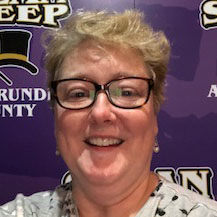
by Linda Roydhouse | Jul 30, 2017 | Client Tips
Do you have a personal Facebook, Twitter, or Instagram account? Well, so do most of your current customers and future customers. What better way to grow your business than by connecting with those customers through social media? Social media also allows your business to connect with other local businesses, which is always a plus.
A wise group of people, The Spark Marketer Crew, enlightened me on the important role social media has in branding your business, increasing web traffic to your company website, and making your online presence stronger. It just makes sense. Social media plays a major role in businesses today because most customers do their research on a business via their computers and smartphones before they make that call.
Our company has been using social media for years and it has been a great tool for us for building relationships with other businesses and customers. We started off using Facebook, then added Twitter and Instagram. These social media platforms allow us and our customers to engage with each other on a regular basis, not only when our services are needed.
Don’t be afraid to try social media for your business, but remember, it takes time and commitment for it to grow — but it’s all worth it.
Here are a few tips to get you started:
- Don’t use your personal account — have a separate social media account for your business.
- There are many social media platforms to choose from, so choose the one you feel the most comfortable with. In my opinion, Facebook is the easiest.
- You need to post daily on each of the platforms you choose and always have an image with your post.
- Keep it professional, but fun. Share repair work photos, employee work anniversaries or birthdays, helpful tips that you or your customers would enjoy, etc. Mix it up!
- Like and share the posts of others.
- Don’t always try to sell something — it’s social media. You need to find a balance between business and popularity and use the platform to be social.
Social Media for business is necessary if you want to stay in front and grow your company, but it takes time and commitment. Stick with it! Your Facebook, Twitter, or Instagram followers will be people who know your company and have most likely done business with you in the past. Use social media to show them who you are and what you’re about and to build relationships, turning one-time customers into long-term fans. These are the customers who are going to tell their friends about you!
 Linda Roydhouse is co-owner of Clean Sweep of Anne Arundel County and offers social media management tools, tips, and consulting services to other business owners through Roydhouse Effect. Check her out!

by Fred Brewer | May 15, 2017 | Client Tips
It seems like everywhere you look, someone is claiming to know the “secret recipe” for a great leader. These articles always capture our attention because we all want to be better leaders, but which leadership traits are actually backed by data?
Russell Reynolds Associates and Hogan Assessment Systems studied more than 200 CEOs and published data revealing three successful leadership indicators. So what are they? Let’s dive in!
They’re filled with purpose, passion & urgency. Great leaders have a real sense of purpose and know where they’re headed. They’re passionate about achieving that purpose, and excitedly take steps to move them closer to their goals. This passion and purpose also instills a sense of urgency and drives them to constantly work to move the company forward. These aren’t the leaders who are likely to deliberate or take a long time making a decision, but they’re not impulsive either. Instead, they embrace change and move forward, taking calculated risks.
They’re good at identifying what’s important. Leaders are always bombarded with information from everyone in the company. But great leaders can sort through that information swiftly and identify the important things that are likely to affect the business and the business’s decisions. With their great sense of purpose, passion, and urgency, great leaders quickly separate the important from the unimportant and use that information to make decisions they can be proud of and that can propel their companies forward.
They’re humble life-learners who work well with others.
Many of us hold the notion that great leaders are prideful people who think they know everything and are difficult to work with. But according to this data, truly great leaders are the complete opposite of this iconic leader. Great leaders are never finished learning, and they’re always seeking opportunities to add to and expand their knowledge. These leaders are likely found listening to podcasts and reading in their spare time, and chances are, they’re hiring people they deem smarter than themselves. Why? They know that surrounding themselves with smart people isn’t a threat to their own intelligence — it presents an opportunity for them to learn from others and get smarter. These leaders may be great at making decisions on their own, but they know that two heads are better than one, which is why they’re also likely to seek input from advisors, employees, and colleagues. They want what’s best for the company, regardless of where the best ideas come from.
So, how did you fare? Do you have these traits and qualities? The good news is, great leaders are made, not born, so if you lack any of these qualities, your fate isn’t written in stone. You can always work on cultivating these qualities, traits, and ways of thinking in yourself.

by Fred Brewer | Apr 30, 2017 | Client Tips
Think back to the last time you gave your “elevator pitch” and told someone what it is that you do and what your business is all about. If you’re like most people, you froze for a moment like a deer in headlights and then tripped all over your words trying to find just the right ones.
Is that because most of us don’t know what it is we do? No, of course not. We just don’t know how to communicate it effectively — we end up pulling facts out of the air and rolling them into a ball every time the question comes up.
Why not take the time to create a memorable story that you can tell, and that those you tell can tell to others? It doesn’t have to be a long story — in fact, the shorter, the better — but it does need to have all of the main components of a story. And since most of us haven’t given that much thought since high school, here’s a refresher course.
Every good story has:
- A Hero. Obviously, right? But what most businesses get wrong is that they think they’re the hero. The hero is the customer, the main character of your business’s story, not you! Think about how your story changes when you consider the customer the hero. Would you use others-centric language when telling your story? Would you think about your customer differently? Would you think about yourself differently?
- A Problem. Every hero has a problem, be it internal or external, but the secret to remember here is that connected to every external problem is an internal problem. Sure, your hero may have dirty air ducts (external problem), but the reason they need them cleaned is that they’re concerned about their children’s health and want to be good parents (internal problem). Think about the problems your hero has and the real reasons they need and seek out your help. Consider the underlying internal problems and the emotions associated with them so you can better craft your story and make it resonate with those you’re telling it to.
- A Guide. That’s you! You’re the Yoda who’s been in your hero’s shoes (to some extent) and knows what needs to be done to resolve the problem. To be an effective and trustworthy guide, you have to have two things: authority and empathy. If you have one, but not the other, your hero isn’t going to take your advice or follow your lead.
- A Plan. The plan is what you offer the hero to help them with their problem. In it, you need to address the negative emotions the hero is dealing with; reassure him that you get it and that the plan can work; show him what’s at stake if he doesn’t take action; and show him what success looks like if he does follow the plan. This is where the story shifts — you’ve guided him through the plan and let him know what action he needs to take. You’ve done your part and now it’s all in the hero’s hands.
So, now that we’ve covered the basics of storytelling as they relate to business, how can we translate the framework into an elevator pitch? Let’s use Spark Marketer as an example. Let’s say a stranger comes up to me on an elevator and asks, “What does your company do?” I might say:
“Service business owners (hero) strengthen our communities and provide important services to all of us. They’re good at what they do, they just sometimes need a little help online, which is where a lot of customers are looking for them (problem). Spark Marketer (guide) builds optimized websites and does ongoing marketing, so they can be found by those who are looking for them, where they’re looking for them (plan). We really only exist to help service businesses reach their ideal customers and achieve the level of success they dream of for themselves.”
In this elevator pitch, we’ve described our hero, their problem, and our plan, and we’ve shown that our plan has and can work. We’ve established both authority and empathy as the guide, and shown what success looks like if the plan is followed (more customers). Now, we could probably do a little finessing to make it a bit more memorable, but we’ve got all the basic elements of a story here, so we’re off to a good start.
Have you ever taken the time to translate who you are and what you do into a compact elevator pitch using the basic components of a good story? Challenge yourself! It’s well worth doing and will give you the clarity you need to tell your story quickly and effectively, and those listening the clarity to repeat it. So take a few minutes this weekend to try this exercise!
What About the Unspoken Elements of Your Story?
A quick additional note on story. Have you thought about all of the unspoken elements of your business’s story? Like:
- Your Email Address – When you have been in business for more than six months, and are not using an actual company domain email address to communicate with your customers and vendors (you@yourcompany.com), you are telling a story about how you don’t know if you’ll be in business in another six months, so why bother? You are communicating loudly that you think being unprofessional and less-than-polished is an acceptable standard for your organization. Is that really the story you want to tell?
- Your Logo – Your brand mark is a memorable visual story that tells a lot about your company in a single glance. It should take someone less than three seconds to see, read, and interpret what they are seeing in your logo. Your visual story needs to be simple, concise, and memorable, even when viewed on the side of a truck, at highway speeds, during rush hour. Logos with more than two or three elements going on are usually forgotten. Avoid obscure symbology or cleverness, unless you want to explain to every potential customer what your logo means, when you could be using that time to tell them how you can actually help them.
- Your Uniforms and Trucks – Cleanliness is its own story, and it’s an important one when it comes to local service businesses. A clean, well-maintained truck gets noticed. So does a dirty one, but only one leads to new business. Similarly, a professional uniform communicates a job well done, even before the quote is accepted. A well-branded, well-maintained fleet and crew speaks volumes about your business.
- Your Phone Manners – I am amazed at how many local service businesses don’t give a hoot about how their business phone is answered – IF it is answered at all! The way you choose to answer the phone will set the tone for the rest of the relationship with your customer and give them a preview of your story. Get it right and you’ll get a chance to receive a standing ovation. Get it wrong and your customer will never even set foot in the theatre.
- Customer Testimonials & Reviews – This is the part of your story that you don’t get to tell – your customers tell this part for you. But don’t make the mistake of thinking that theirs is a minor role in your production. No, theirs is the lead part. It’s the most trusted, most authentic, and improvisational storyline you have working for you. From a marketing standpoint, it could be argued that, in the end, your business is nothing more than the story people tell about you when you aren’t in the room. And while you cannot script it or write it, you exert an enormous amount of influence before the final draft gets handed in. How? In the experience you deliver to the customer.
These are just a handful of the ways people take in the entire narrative of what it will be like to do business with you. These critical details tell your audience whether or not your business is going to be a blockbuster hit or a box office flop. They let the audience know if there will be a happy ending or a tragedy. They indicate whether you will be showing up on the scene as the hero or the villain.
If you take the effort to get these little details right and clarify your story, then your well-crafted website and the beautifully written marketing messages begin to work in concert with and amplify all that you are doing right in your business. All together, they will do the job of telling the world that you are one of the rarest things in the world of business – a truly good story.